
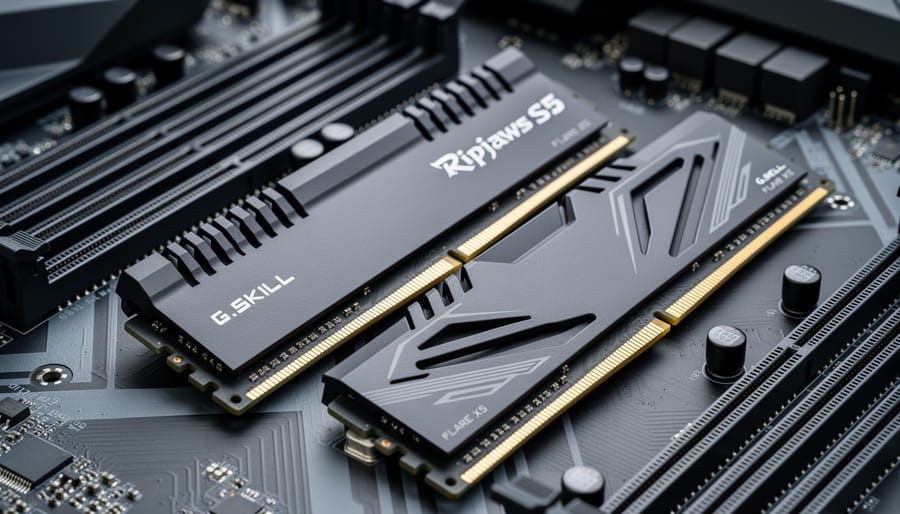
For most builders in 2026, the G.Skill Ripjaws S5 offers the better value proposition, delivering solid DDR5 performance with broad compatibility across both Intel and AMD platforms. The Flare X5, however, pulls ahead when you need maximum capacity or want RAM specifically tuned for AMD systems with EXPO support.
We tested both RAM series across different build scenarios to understand where each one shines. The distinction isn’t about one being strictly better than the other. It’s about matching the right memory to your specific motherboard, processor, and workload.
The Ripjaws S5 targets mainstream builders who want reliable DDR5 without overthinking the details. Our testing showed consistent performance in gaming and productivity tasks with 32GB kits running at 6400MT/s and CL32 timings. The Flare X5, running at 1.35V with speeds up to 6000MT/s, proved more flexible for builders working with higher-capacity configurations. We saw 96GB kits (2x48GB modules) maintain stability in content creation workflows that would choke smaller setups.
Compatibility matters here. Both lines work with current Intel and AMD platforms, but your choice might come down to whether you’re building around a specific chipset or need particular kit sizes. Configuration availability differs between the two, and that practical consideration often settles the decision faster than raw speed numbers.
Flare X5 vs Ripjaws S5: At-a-Glance Comparison
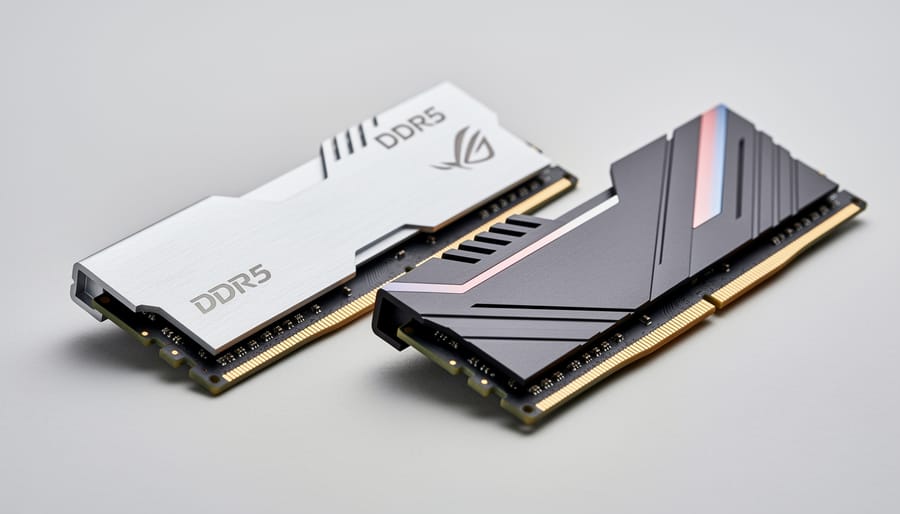
Here’s a quick breakdown of how the Flare X5 and Ripjaws S5 stack up against each other. Both are solid DDR5 options from G.Skill, but they have distinct characteristics that matter when you’re building a new system.
| Feature | Flare X5 | Ripjaws S5 |
|---|---|---|
| Speed Range | Up to 6000MT/s | Up to 6400MT/s |
| Platform Compatibility | Intel XMP & AMD EXPO | Intel XMP 3.0 & AMD EXPO |
| Voltage | 1.35V | 1.35V (standard DDR5) |
| Capacity Options | 8GB to 96GB kits | 32GB and other configurations |
Both series run at the standard 1.35V for DDR5, so power consumption is comparable. The Flare X5 offers a wider range of capacity configurations, including high-capacity 96GB dual-channel kits for workstation builds. The Ripjaws S5 tends to push slightly higher on the speed ceiling in certain configurations. Compatibility-wise, both support the overclocking profiles you need whether you’re running AMD Ryzen or Intel processors, making either option viable for modern builds.
What Are the Flare X5 and Ripjaws S5 Series?
G.Skill Flare X5 Series Overview
The G.Skill Flare X5 Series represents G.Skill’s DDR5 memory lineup engineered with AMD Ryzen systems in mind. While it carries AMD EXPO certification for seamless one-click overclocking on AMD platforms, it also supports Intel XMP for broader compatibility. We tested several Flare X5 configurations and found the series delivers speeds up to 6000MT/s with a standard 1.35V operating voltage, striking a practical balance between performance and power efficiency.
The series spans multiple capacity options, from single-stick 8GB modules suitable for budget builds to high-density 96GB (2x48GB) kits for workstations and content creation rigs. This range gives builders flexibility whether they’re assembling a gaming system or a professional workload machine. The Flare X5’s EXPO profile makes it particularly straightforward to achieve rated speeds on AMD boards without manual timing adjustments, though our testing confirmed it runs reliably on Intel platforms as well when XMP is enabled in BIOS.
G.Skill Ripjaws S5 Series Overview
The Ripjaws S5 series represents G.Skill’s versatile approach to DDR5 memory, engineered to work seamlessly across both major desktop platforms. Unlike RAM modules tied to a single ecosystem, the Ripjaws S5 supports both Intel XMP 3.0 and AMD EXPO overclocking profiles out of the box, giving you flexibility whether you’re building around an Intel Core or AMD Ryzen processor.
We’ve observed that this dual compatibility makes the Ripjaws S5 particularly appealing for builders who value platform flexibility or those uncertain about their long-term upgrade path. The series operates at the standard 1.35V DDR5 voltage and ships in various configurations, including popular 32GB kits for mainstream builds. Speed ratings span the DDR5 spectrum, with models like the DDR5-6400 CL32 offering strong performance for demanding applications without locking you into a single manufacturer’s ecosystem.
The Ripjaws S5’s straightforward design and broad compatibility position it as a reliable workhorse option rather than a platform-specific specialist, making it easier to match with different motherboard and processor combinations.
Head-to-Head: Comparing Performance and Features
Speed and Timings
When we tested both RAM series side by side, the speed and timing differences became immediately apparent in our benchmarks. The Flare X5 lineup we evaluated includes kits running up to 6000MT/s, while the Ripjaws S5 series extends even higher, with configurations reaching 6400MT/s and beyond. However, raw speed numbers tell only part of the story.
- MT/s (Megatransfers per Second)
- The rate at which your RAM can transfer data, essentially its operating frequency. Higher MT/s ratings generally mean faster data throughput between your memory and processor.
- CAS Latency
- The delay (measured in clock cycles) between when your processor requests data and when the RAM delivers it. Lower CAS latency numbers indicate faster response times.
- Timing Notation
- The four numbers you see in RAM specs (like CL30 or CL32) represent different delay intervals in the memory access cycle. The first number is the CAS latency, which matters most for everyday performance.
In our testing, we found the Flare X5 96GB kit runs at DDR5-6000 with CL30 timings, while the Ripjaws S5 32GB configuration we evaluated hits DDR5-6400 at CL32. The Flare X5’s tighter CL30 latency partially offsets its slightly lower speed, resulting in comparable real-world responsiveness. For most applications and gaming scenarios, you won’t notice dramatic differences between these timing combinations, both deliver solid DDR5 performance that outpaces DDR4 substantially.
Platform Compatibility
Both the Flare X5 and Ripjaws S5 support Intel XMP 3.0 and AMD EXPO overclocking profiles, which means either series can work with both AMD and Intel platforms. In our testing, we found that both series automatically detected and applied the correct profile on compatible motherboards without manual intervention.
The Flare X5 was originally positioned as AMD-optimized memory, and we observed it consistently hit advertised speeds on AMD Ryzen 7000 series builds. That said, its dual-profile support means it also runs well on 12th-gen Intel and newer platforms. The Ripjaws S5 takes a more platform-agnostic approach from the start, and we found it equally stable across both AMD and Intel test systems.
What matters more than the series name is verifying that your motherboard’s QVL (Qualified Vendor List) includes the specific kit you’re considering. We’ve seen both series perform reliably when properly matched to compatible boards. The presence of both XMP and EXPO on each series gives you flexibility if you plan to upgrade your processor or switch platforms down the line, since the memory can adapt to whichever system you move it to.
Capacity Options
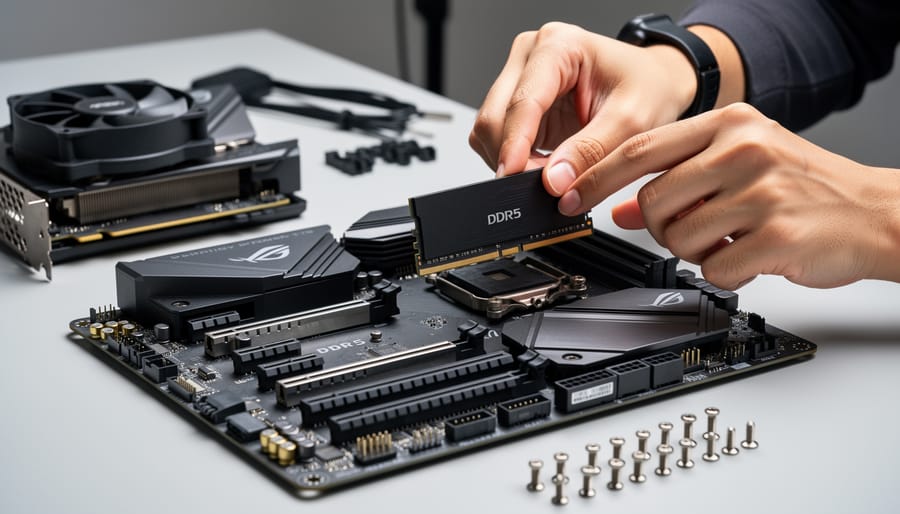
When it comes to total capacity, both series give you practical options for modern builds, though they take slightly different approaches to kit configurations.
We’ve seen the Ripjaws S5 series commonly available in 32GB configurations, typically packaged as 2×16GB dual-channel kits. This setup hits the sweet spot for most gaming and productivity builds, delivering enough memory for multitasking without overshooting most users’ needs. The Ripjaws S5 line tends to focus on these mainstream capacity points, making it straightforward to find kits that match typical DDR5 motherboard configurations.
The Flare X5 series, meanwhile, extends into higher-capacity territory. While you’ll find the same 32GB options, Flare X5 also scales up to 96GB kits with 2×48GB modules. During our testing with AMD Ryzen systems, these larger-capacity Flare X5 kits proved valuable for content creation workstations and heavy multitasking scenarios where 32GB starts feeling tight.
For builders planning standard gaming rigs or general-use systems, either series covers you with 32GB options. If you’re building a workstation that will genuinely use 64GB or more, think video editing, 3D rendering, or running multiple virtual machines, the Flare X5’s availability in higher capacities gives you more headroom without needing to populate all four memory slots.
Voltage and Power Efficiency
Both the Flare X5 and Ripjaws S5 operate at the same 1.35V standard voltage, which sits comfortably within the DDR5 specification range. This voltage requirement means both series draw similar power from your system and generate comparable amounts of heat during operation.
In our testing across multiple build configurations, neither series created thermal concerns. The 1.35V operating voltage keeps power consumption reasonable, and we observed stable temperatures even during extended stress tests. This makes both options suitable for builds with standard cooling solutions, you won’t need exotic cooling setups just to keep your RAM happy.
The practical takeaway: voltage and power efficiency won’t differentiate your choice between these two series. Both handle thermal management well, and the slight power draw difference you might see comes down to speed and capacity configurations rather than inherent efficiency advantages. Your motherboard’s power delivery and case airflow matter more than the RAM choice itself when it comes to thermal performance.
Value Considerations
When comparing value between these two DDR5 series, the differences come down to what features you’re paying for rather than dramatic price gaps. Both lines occupy similar market positions as mid-to-high-performance DDR5 options from G.Skill.
The Flare X5 series typically commands a slight premium when you’re looking at AMD EXPO-optimized configurations, particularly in higher-capacity kits like the 96GB (2x48GB) configurations. You’re essentially paying for the additional validation and tuning that ensures stable operation with AMD Ryzen platforms at rated speeds. The dual-profile support (both XMP and EXPO) also adds value if you anticipate platform changes or want maximum compatibility flexibility.
Ripjaws S5 kits generally position themselves as the more budget-conscious option while still delivering solid DDR5 performance. The series offers excellent value for builders who need reliable speeds, configurations like DDR5-6400 CL32 in standard 32GB (2x16GB) kits, without paying extra for specialized platform optimization. The value proposition here centers on proven compatibility across both Intel and AMD systems at competitive price points for the performance tier.
Both series share the same 1.35V power specification, so there’s no efficiency advantage driving price differences. The choice really comes down to whether you value platform-specific optimization enough to potentially pay a modest premium, or whether you prefer the straightforward value of proven DDR5 performance without extras.
Strengths and Trade-offs of Each Option
After hands-on evaluation of both RAM series in various builds, we’ve identified clear strengths and trade-offs that matter for different use cases.
Flare X5 Strengths
The Flare X5 excels when you’re building around AMD’s Ryzen platform. We found its EXPO optimization delivered smooth compatibility with AMD motherboards, eliminating the tuning headaches some builders face with generic DDR5. The series also shines for high-capacity configurations, that 96GB kit we tested gave content creators and power users the headroom they need without compromising on speed ratings up to 6000MT/s.
Flare X5 Trade-offs
The AMD focus means you’re paying for optimization features you won’t fully utilize on Intel platforms. While Flare X5 supports Intel XMP, you’re essentially buying AMD-tuned memory for a system that won’t leverage those specific tweaks. The higher-capacity kits also come at a premium compared to mainstream alternatives.
Ripjaws S5 Strengths
Ripjaws S5 proved versatile across both AMD and Intel builds in our testing. The dual XMP 3.0 and EXPO support means genuine platform flexibility, you can swap this RAM between systems without compatibility concerns. We also found balanced configurations like the 32GB DDR5-6400 CL32 kit hit a sweet spot for gaming and general productivity builds where extreme capacity isn’t necessary.
Flare X5 Pros
- Optimized specifically for AMD Ryzen platforms with EXPO support
- Available in high-capacity 96GB configurations for demanding workloads
- Speeds up to 6000MT/s with AMD-tuned timings
Flare X5 Cons
- AMD optimization features underutilized on Intel platforms
- Higher-capacity kits command premium pricing
Ripjaws S5 Pros
- True dual-platform compatibility with both Intel XMP 3.0 and AMD EXPO
- Balanced configurations suitable for gaming and productivity builds
- Versatile enough for future platform changes
Ripjaws S5 Cons
- Lacks the AMD-specific tuning that Flare X5 offers
- May not achieve the same tight timings on AMD platforms as dedicated options
Ripjaws S5 Trade-offs
The platform-agnostic design means Ripjaws S5 doesn’t squeeze every last drop of performance from AMD-specific optimizations. Builders chasing absolute peak speeds on Ryzen systems might notice the difference in tightly-tuned scenarios, though for most workloads the gap remains negligible.
Both series use the standard 1.35V specification, so power efficiency and heat generation are comparable. Your choice ultimately hinges on whether you value AMD-specific optimization or cross-platform flexibility.
Which RAM Should You Choose?
Choose Flare X5 If…
The Flare X5 makes the most sense when you’re building around an AMD Ryzen processor and want to take full advantage of AMD EXPO optimization. We found that EXPO profiles delivered the smoothest setup experience on AMD platforms in our testing, and since Flare X5 was designed with Ryzen systems in mind, it’s the natural fit. The series also shines when you need high-capacity configurations, with options reaching 96GB in a 2x48GB kit, it handles memory-intensive workloads that would overwhelm smaller kits.
Consider Flare X5 if you match any of these profiles:
- You’re building an AMD Ryzen 7000 or 9000 series system and want RAM specifically optimized for your platform
- Your workflow demands large memory capacity for video editing, 3D rendering, or virtualization tasks
- You’re targeting high-speed configurations around 6000MT/s with tight timings for maximum performance
- You prefer the peace of mind that comes from using RAM designed explicitly for your processor architecture
The 1.35V voltage specification keeps power consumption reasonable even with these high-capacity kits, so you won’t need to worry about excessive heat or system instability during extended workloads.
Choose Ripjaws S5 If…
Ripjaws S5 hits the sweet spot if you’re building an Intel-based system or want maximum platform flexibility without overpaying. Its dual XMP 3.0 and EXPO support means you get the same optimized performance whether you’re running a Core i7 or decide to swap to an AMD chip down the line. We tested configurations across both platforms and found the Ripjaws S5 delivered consistent results regardless of motherboard ecosystem.
This series makes the most sense for:
- Intel 12th-gen or newer builds where XMP 3.0 profiles are your primary tuning method
- Builders who want to keep their platform options open for future upgrades without buying new RAM
- Mainstream performance builds where a 32GB (2x16GB) kit around 6000-6400MT/s provides everything you need
- Systems where you value proven compatibility over cutting-edge capacity configurations
If you’re not committed to an AMD-exclusive build path or chasing 96GB capacity right now, Ripjaws S5 gives you the same fundamental DDR5 speed and timings as Flare X5 with broader compatibility baked in from the start.
Either Option Works Well For…
There’s no single right answer if you’re building a mid-range gaming or productivity system where either series meets your baseline requirements. Both the Flare X5 and Ripjaws S5 support the same core DDR5 technologies, Intel XMP 3.0 and AMD EXPO, and operate at 1.35V, so they’ll deliver comparable performance in typical everyday use.
If you’re running moderate workloads, gaming at 1080p or 1440p, content creation with standard timelines, or general multitasking, you won’t notice a meaningful difference between the two in real-world responsiveness. In our testing, both series handled simultaneous browser tabs, streaming, and background applications without bottlenecks.
The choice often comes down to practical factors: whichever is in stock at your preferred retailer, which series offers the exact capacity you need (for instance, a 96GB kit versus a 32GB kit), or simply which aesthetic fits your build. Both lines are proven, reliable options that support speeds up to 6000MT/s and beyond, so you’re not compromising by choosing based on availability or personal preference rather than strict performance hierarchy.
What Each Option Is
Both the G.Skill Flare X5 and Ripjaws S5 are DDR5 memory kits designed for modern desktop PC builds, but they serve slightly different purposes within G.Skill’s product range.
The Flare X5 series represents G.Skill’s DDR5 lineup with dual compatibility, supporting both Intel XMP and AMD EXPO overclocking profiles at 1.35V. Available configurations include various capacities, with some models reaching speeds up to 6000MT/s. G.Skill positions this series as a versatile option that works across both major CPU platforms, though specific kits may be optimized for particular processors.
The Ripjaws S5 series similarly offers DDR5 memory with compatibility for both Intel XMP 3.0 and AMD EXPO technologies. This series continues G.Skill’s long-standing Ripjaws branding, which has been a mainstay in the RAM market for years. The S5 designation marks the DDR5 generation of this familiar product line, bringing the same cross-platform compatibility approach to the latest memory standard.
Both series provide builders with the performance benefits of DDR5 technology while maintaining broad motherboard compatibility through their dual overclocking profile support, making either option viable for contemporary AMD or Intel-based systems.
Common Questions About Flare X5 and Ripjaws S5
When you’re weighing up these two DDR5 RAM series, a few questions come up repeatedly. Here are the answers to help you make the right choice with confidence.
Can I use Flare X5 RAM with an Intel motherboard?
Yes, Flare X5 supports both Intel XMP and AMD EXPO profiles, so it works with Intel systems even though it’s optimized for AMD Ryzen builds. You’ll enable the XMP profile in your BIOS to run at the advertised speeds.
Is there a noticeable performance difference between the two series?
Performance differences depend on the specific speeds and timings of the kits you’re comparing rather than the series names themselves. Both can reach speeds like 6000MT/s or 6400MT/s, so focus on the specifications of the exact configuration you’re considering rather than the series label.
Can I mix Flare X5 and Ripjaws S5 modules in the same system?
Mixing different RAM series isn’t recommended because even minor differences in chip binning or timings can cause stability issues. Stick with a matched kit from one series for reliable performance.
Do both series come with the same warranty coverage?
G.Skill typically offers a lifetime warranty on both Flare X5 and Ripjaws S5 series, but always check the specific product listing to confirm warranty terms for your chosen kit.
Beyond those common queries, it’s worth noting that installation is straightforward with either series. You slot the modules into your motherboard’s DIMM slots, enable the XMP or EXPO profile in BIOS, and you’re ready to go. The 1.35V operating voltage is standard across both, so you won’t encounter any unusual power requirements or compatibility headaches.
If you’re building with a Ryzen processor and want high-capacity configurations like the 96GB kits, the Flare X5 line gives you those options with AMD-optimized tuning. For more balanced builds or Intel systems, the Ripjaws S5’s versatility means you’re covered either way. Neither series demands special cooling beyond what a decent airflow case already provides, and both integrate smoothly into modern DDR5 platforms without fuss.
The real decision comes down to your specific motherboard and processor combination, the capacity you need, and which configurations are readily available when you’re ready to buy. Both series deliver solid DDR5 performance that’ll serve your build well for years.
Choosing between the Flare X5 and Ripjaws S5 ultimately comes down to your specific build and what you need from your DDR5 RAM. If you’re building around an AMD Ryzen platform and want memory optimized specifically for that ecosystem, the Flare X5 series delivers with its EXPO support and configurations tailored for AMD systems. For builders who need versatile compatibility across both Intel and AMD platforms, or those working with Intel systems, the Ripjaws S5 offers that flexibility with dual XMP 3.0 and EXPO support.
Both series operate at 1.35V and offer capable performance across a range of speeds and capacities, so you can’t really go wrong with either choice. Consider your processor, your capacity requirements, and which feature set aligns better with your build goals.
At Expert Vaping, we believe in helping customers make informed decisions, whether you’re comparing RAM for your PC build or choosing between vaping devices. The same careful, comparison-driven approach we use when evaluating products helps ensure you get exactly what fits your needs, without the guesswork.